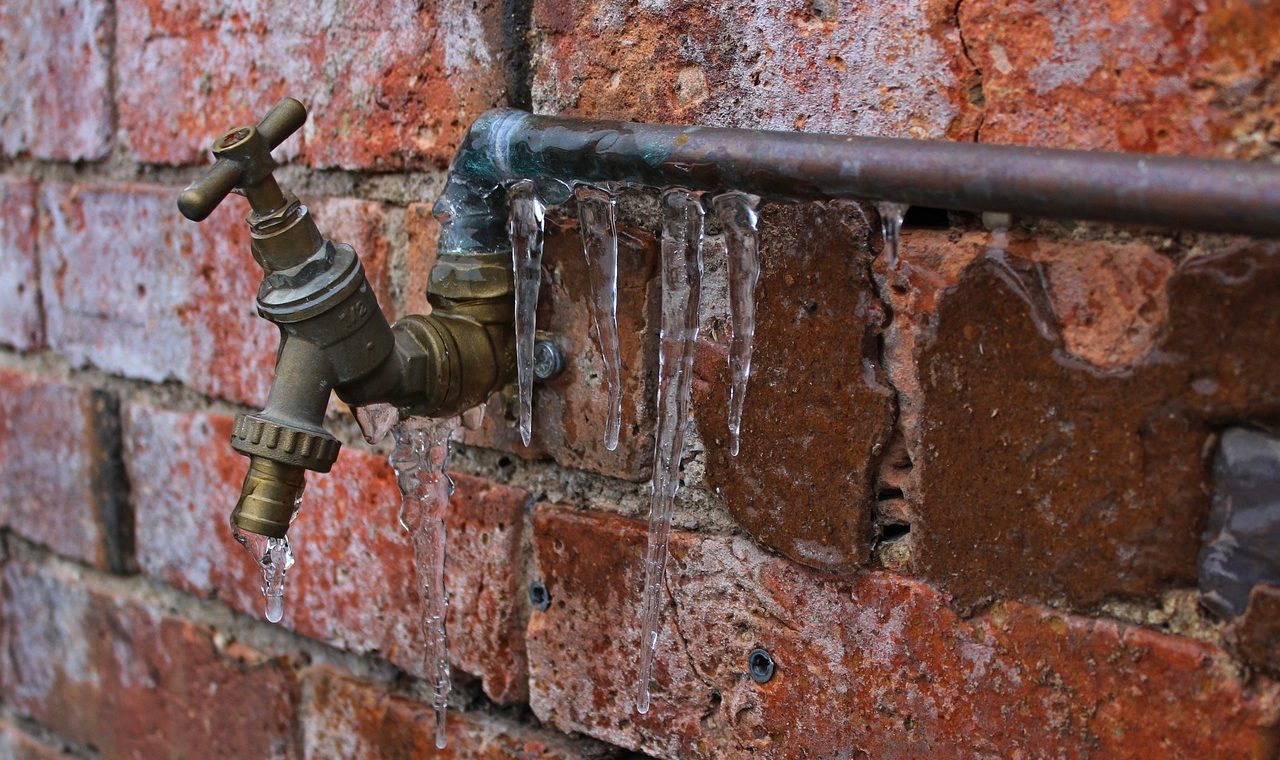
A frozen pipe does not burst where the ice forms. It bursts further along, where water pressure builds up between the ice and a closed tap. That is why a split pipe often shows up in a ceiling, far from the cold spot that caused it.
Know where your stop valve is
Before the first frost, find your main stop valve and check it turns. If a pipe bursts, closing it in the first minutes is the single biggest thing you can do to limit the damage.
Insulate the pipes most at risk
Pipes in lofts, garages, crawl spaces and on outside walls freeze first. Foam lagging costs a few dollars a metre and takes minutes to fit.
- Lag every exposed pipe in unheated spaces
- Fit covers on outdoor taps and turn them off from inside
- Seal gaps where pipes pass through outside walls
Keep a little heat on
If you are away, leave the heating set to at least 12°C. On the coldest nights, open the doors under kitchen and bathroom sinks so warm air reaches the pipes.
Most burst pipes we see happen in homes left empty over a holiday. A low heating setting would have prevented nearly all of them.
If a pipe does freeze
Turn off the water, open the tap the pipe feeds, and warm the pipe gently with a hair dryer, starting from the tap end. Never use a naked flame. If you cannot reach it or see a split, call us — it is what our 24/7 line is for.